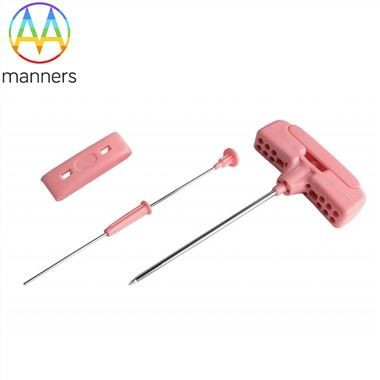
Medical-grade Stainless Steel Base Material Is Preferred. The Veress Needles Material Complies With Regulations To Ensure Aseptic And Safe Diagnosis And Treatment.
Apr 20, 2026
Medical-grade stainless steel base material is preferred. The Veress Needles material complies with regulations to ensure aseptic and safe diagnosis and treatment.
Minimally invasive surgical instruments that directly enter the abdominal cavity of the human body have the biocompatibility of the base material, corrosion resistance, and high-temperature sterilization resistance as the first core bottom line for clinical safety. Reliable Veress Needles original manufacturers adhere to the red line of medical material selection. All series of pneumoperitoneum needles are uniformly selected from medical-grade stainless steel materials certified by food and drug regulatory authorities. They are equipped with complete BOM material lists and authoritative material test certificates. The entire material traceability control chain is implemented to prevent the use of inferior recycled steel and industrial non-standard steel in mass production, thus avoiding multiple medical risks such as material allergy, rusting and shedding, and the release of harmful substances during the operation from the source.
The core material of medical-grade stainless steel is fully compatible with the demanding clinical surgical environment. This compliant material has undergone multiple vacuum purification, grain refinement, and deep impurity removal processes. Its internal metallographic structure is dense and uniform, free of slag inclusions, pores, and hidden cracks. It naturally possesses excellent biocompatibility with the human body, with no risk of heavy metal leaching. Direct contact with abdominal soft tissues, body fluids, and abdominal mucosa does not cause allergic reactions, inflammation, or rejection. It is suitable for safe minimally invasive diagnosis and treatment for patients of all ages. At the same time, the material is resistant to acids, alkalis, and body fluid corrosion, as well as immersion in medical disinfectants. It does not oxidize, rust, or have surface peeling even after long-term and repeated contact with intraoperative irrigation fluids, disinfectant alcohol, and sterile saline, ensuring the safety and stability of the instrument throughout the clinical use process.
The base material is suitable for multiple standardized high-temperature sterilization scenarios and complies with the management regulations for reusable medical devices in medical institutions. The dedicated stainless steel base material selected by regular manufacturers can withstand repeated cycles of sterilization by high-pressure steam, low-temperature ethylene oxide, and plasma, which are the mainstream clinical sterilization methods. After multiple sterilizations, the needle body does not deform or discolor, the inner cavity does not get clogged, and the rigidity and strength do not decline. The surface protection performance remains stable and meets the standards, eliminating the need for frequent replacement of new devices and effectively reducing the long-term procurement costs of minimally invasive consumables in departments. At the same time, the surface of the base material is smooth and easy to clean, with no micro-pores to hide dirt. After surgery, the disassembled and cleaned devices have no residual blood, tissue debris, or body fluid attachments, quickly meeting the standards for sterile reuse and adapting to the standardized closed-loop sterilization operation process of the centralized disinfection supply center in the operating room.
Full traceability and archiving of materials throughout the entire production chain, strengthening the defense line of medical compliance supervision. The powerful manufacturer has established a complete material control system, from batch sampling and mechanical property testing of raw materials upon entry to the factory, third-party authoritative biocompatibility testing, to the classification and archiving of materials used in the entire process of finished product assembly. A complete BOM (Bill of Materials) is accurately compiled, clearly listing all core information such as base material grades, production batches, traceability codes, and compliance test numbers. Each batch of Veress Needles can simultaneously issue officially recognized material qualification certificates, biological safety test reports, and base material traceability vouchers. The entire process is traceable with a unique code for each item, perfectly aligning with the new regulations on the unique identification and traceability of medical devices. It meets the full compliance requirements of material review for hospital inventory and regular random inspections for medical quality control in public hospitals, avoiding the risk of medical liability due to non-compliant materials.